Effective Procurement and Anti-Corruption
Effective Procurement reduces corruption from newly funded initiatives. Anti-Corruption lowers existing corruption over time.
Effective Procurement
Fund Effective Procurement before the purchases whose corruption increase you want to reduce. Its effect applies to subsequent funding. Check its prerequisites and base cost when placing it in an opening sequence.
Anti-Corruption
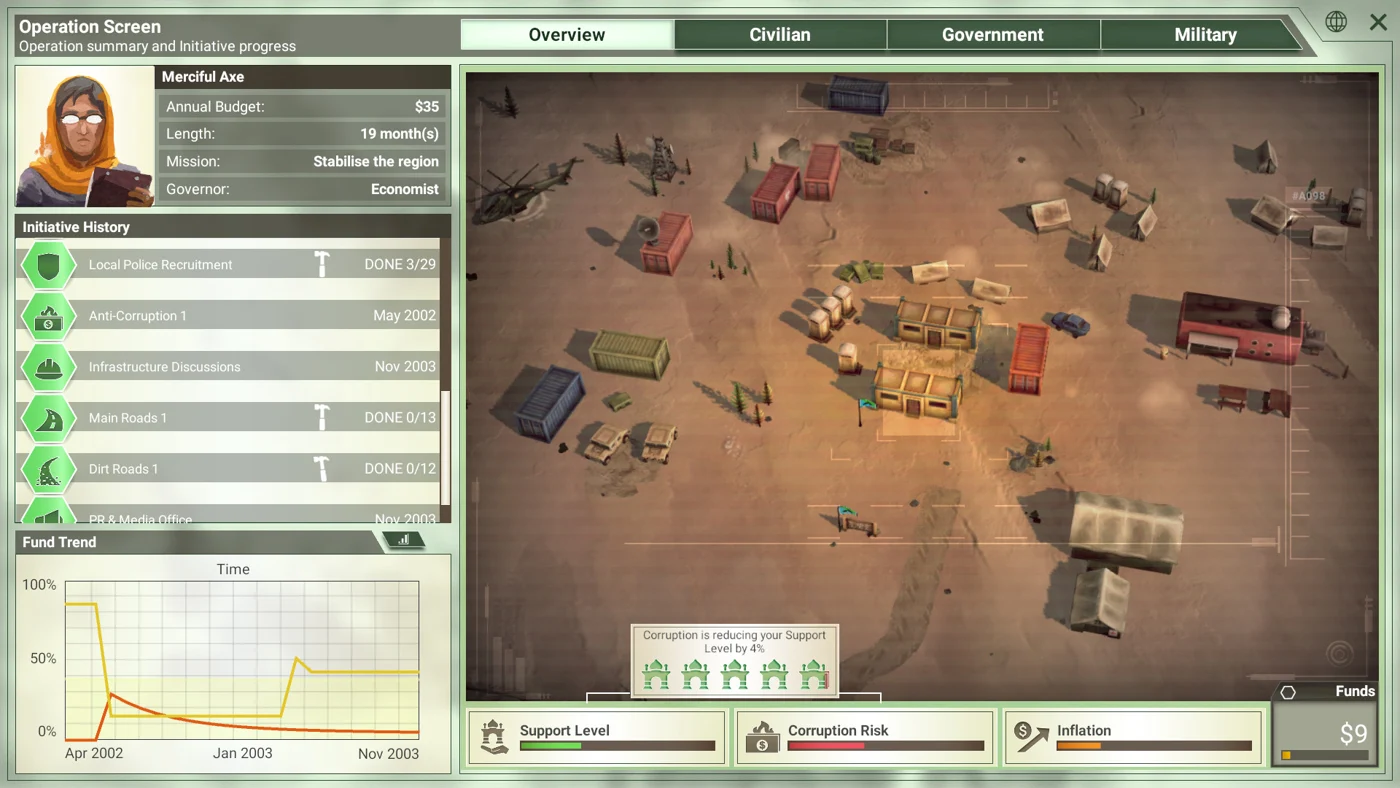
Anti-Corruption 1 starts a gradual reduction in corruption. Later levels extend that reduction. Allow time for the funded initiative to affect the corruption level.
Corruption Purge
Corruption Purge 1 gives a one-time reduction in corruption risk and a significant temporary reduction in corruption. Further spending can still raise corruption.
Purchase order
A sequence can include both Effective Procurement and Anti-Corruption. Put Procurement ahead of the purchases it should affect, then budget for Anti-Corruption as needed. The planner checks prerequisites and totals base costs; corruption levels must be checked during the operation.